In February 2026, our team traveled to Pibor in South Sudan to meet with church leadership, visit the schools and health facilities Boma supports, and evaluate plans for the new maternity clinic. Here is the trip in photos.
Arrival & Welcome
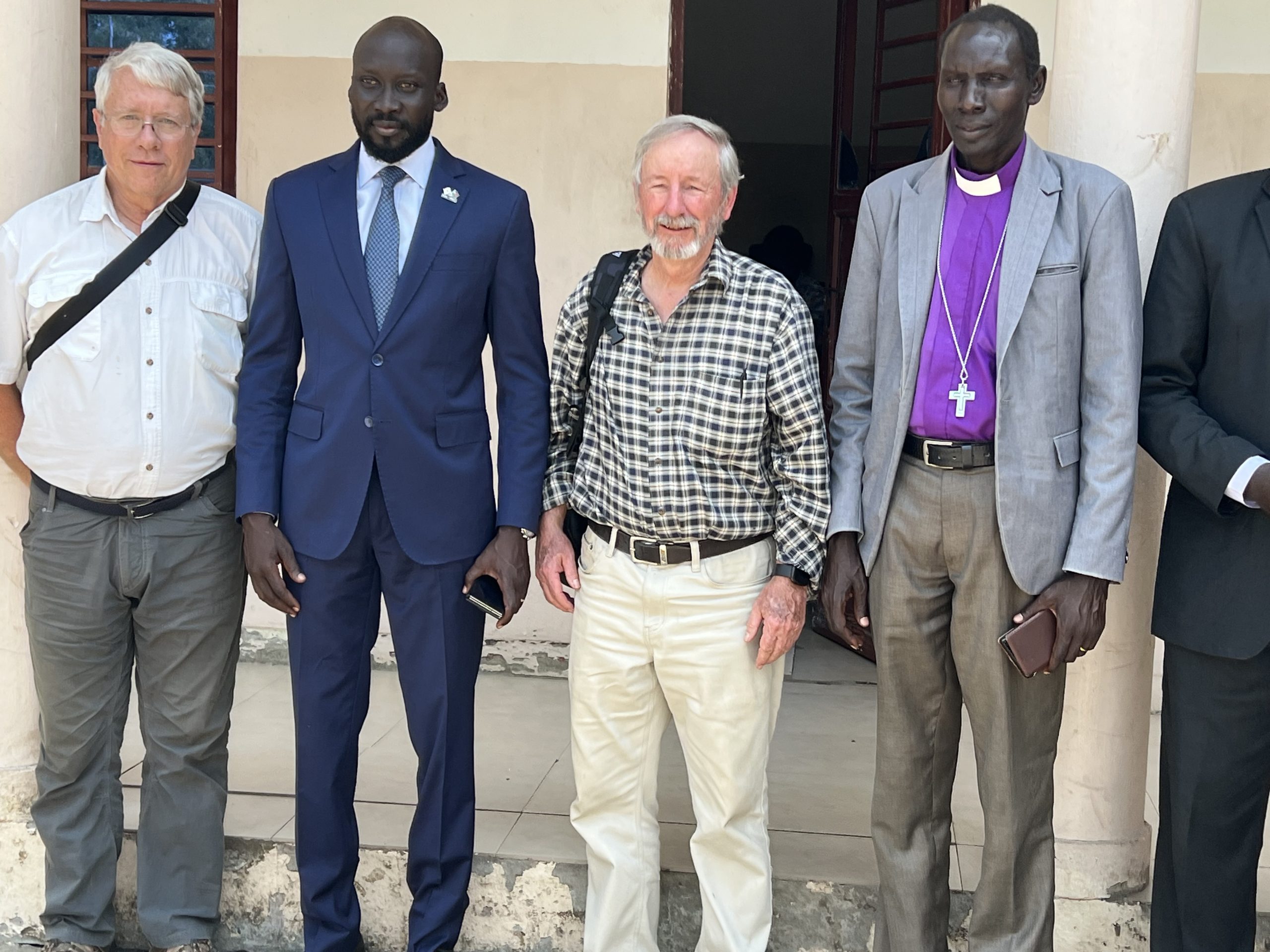
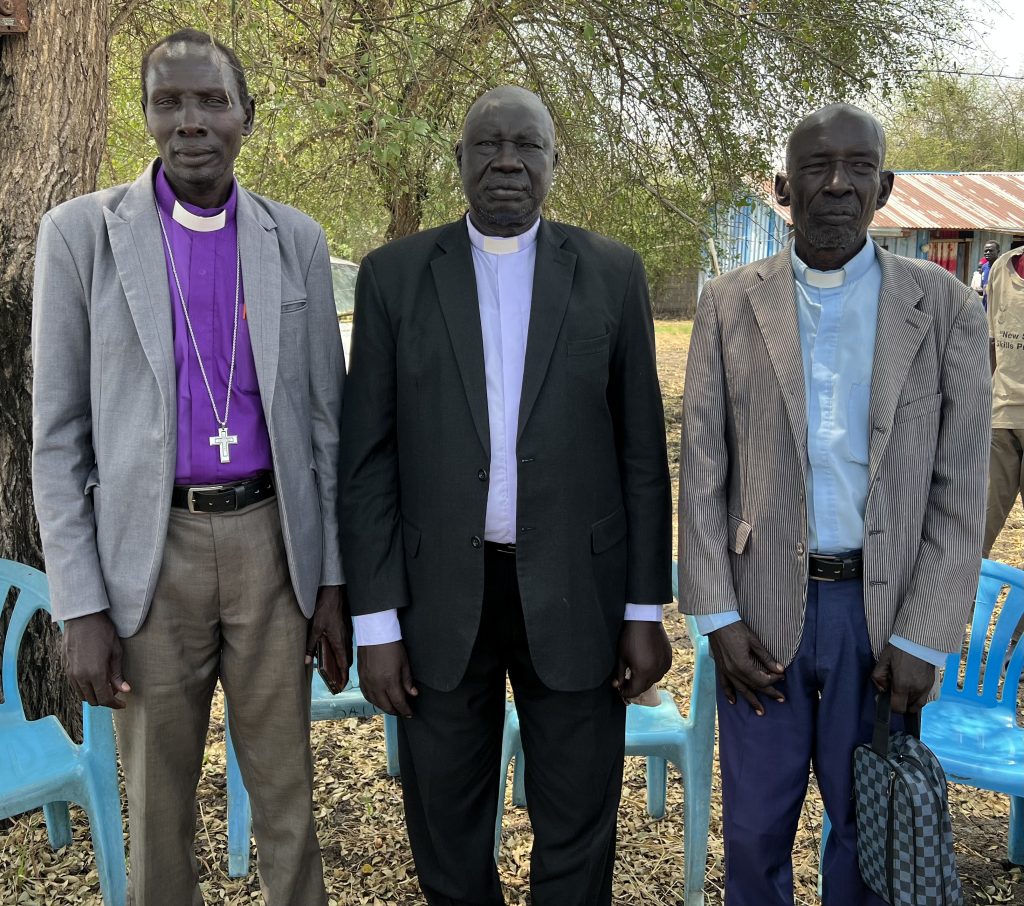
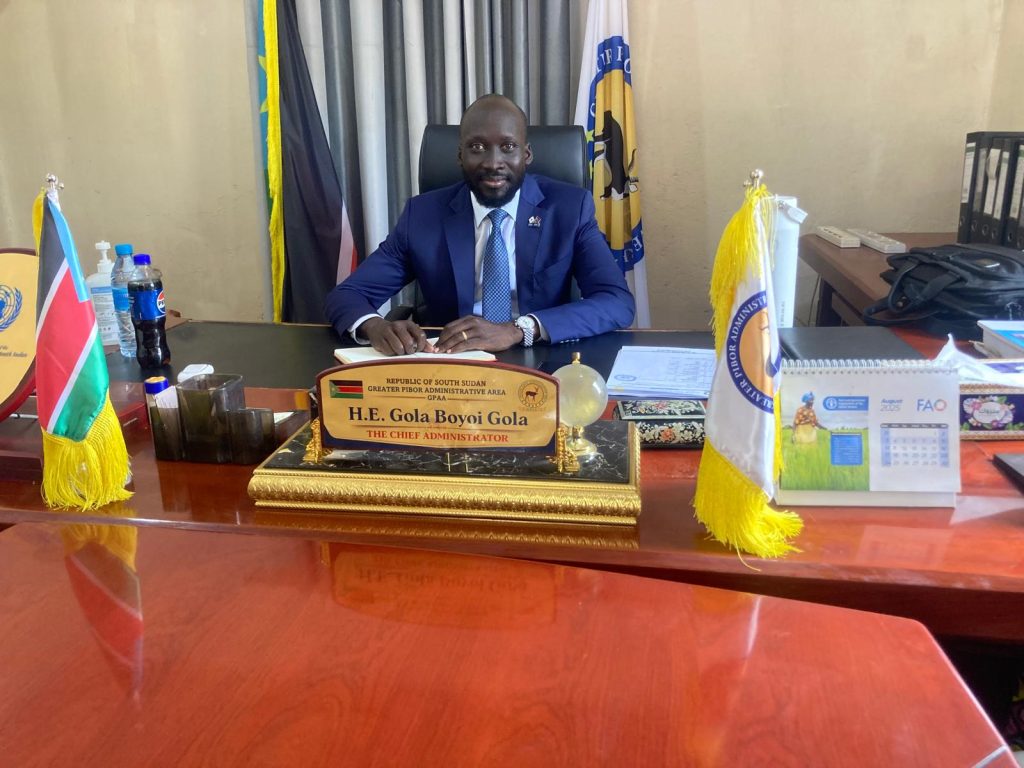
Our team arrived in Pibor!Church leaders welcome our team.Meeting with H.E. Gola Boyni Gola, Chief Administrator of GPAA
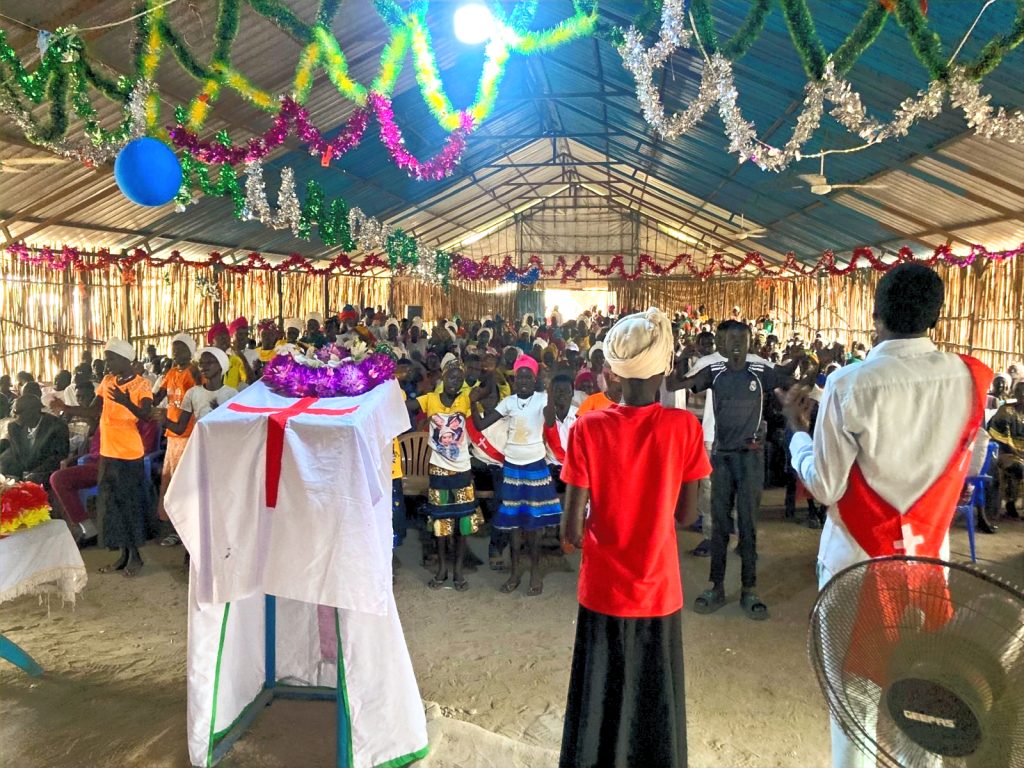
Worship at Pibor Presbyterian Church
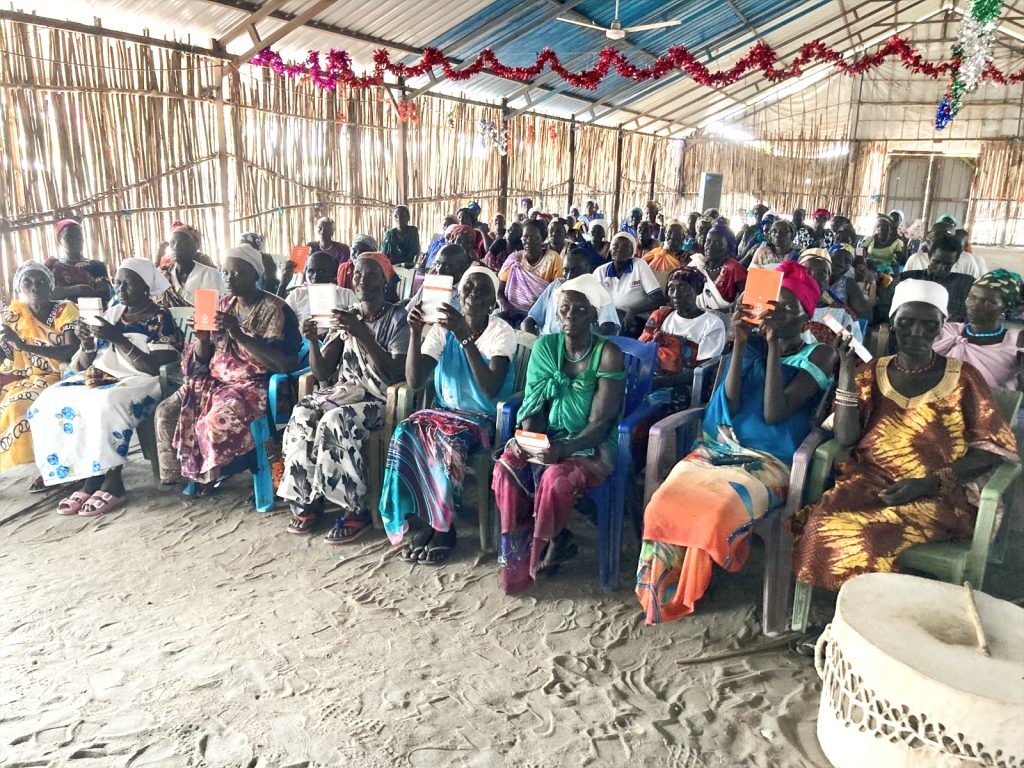
People gathered for talking Bibles, trauma teaching, and learning about Genesis 1.
The Schools
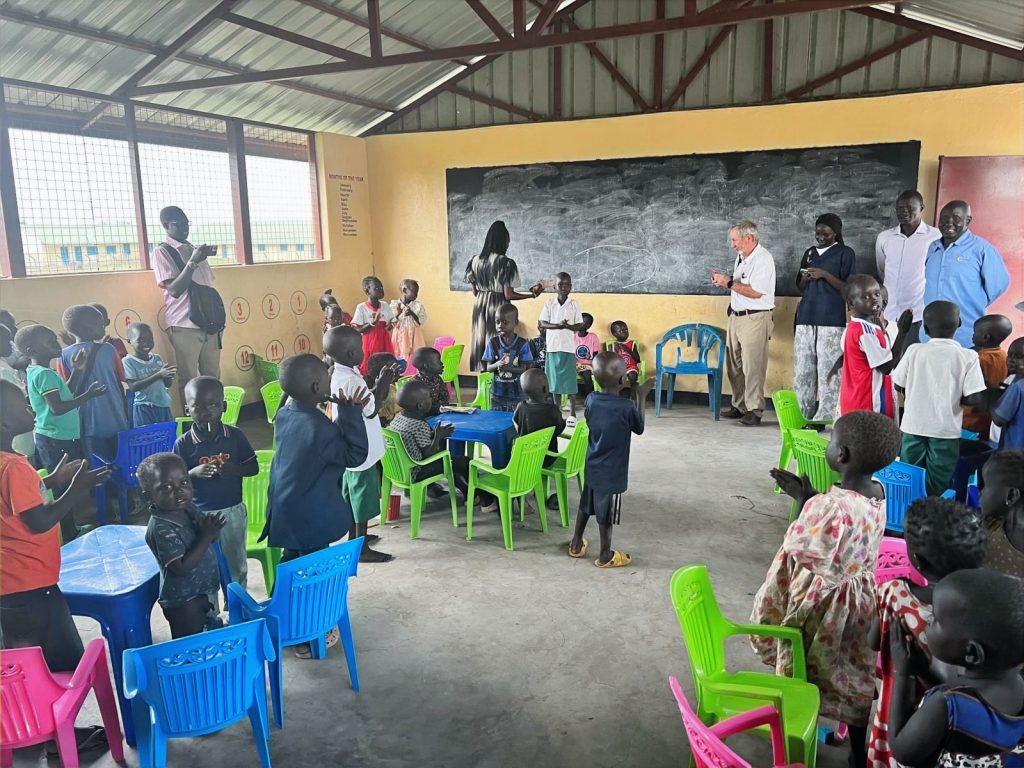
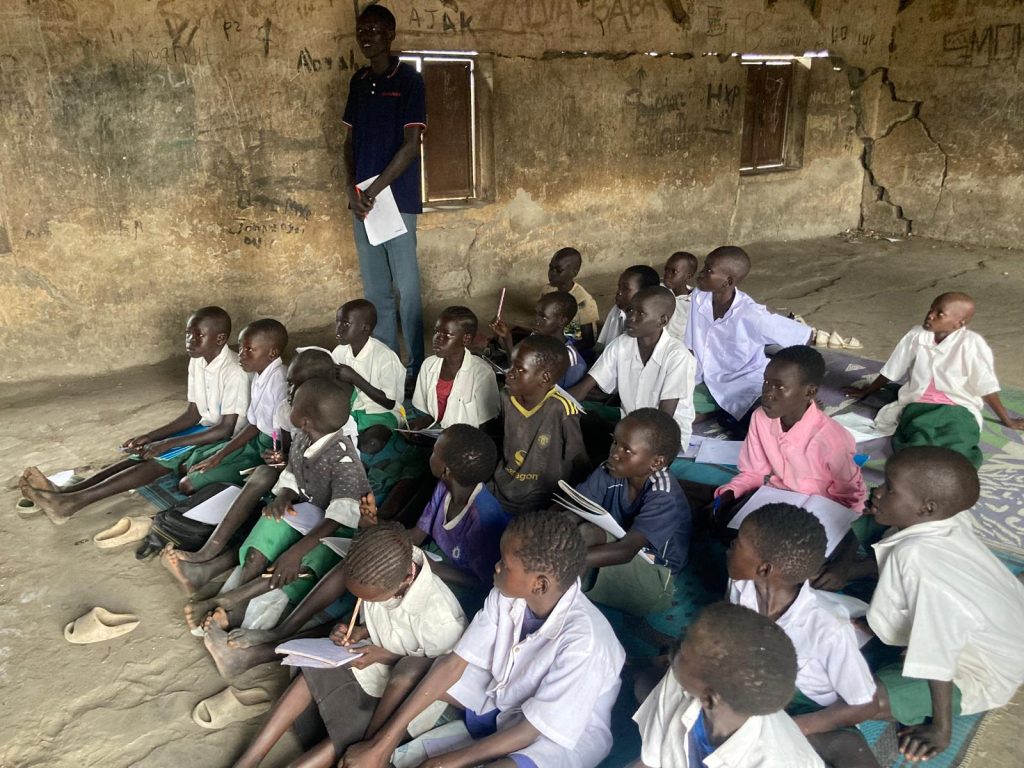
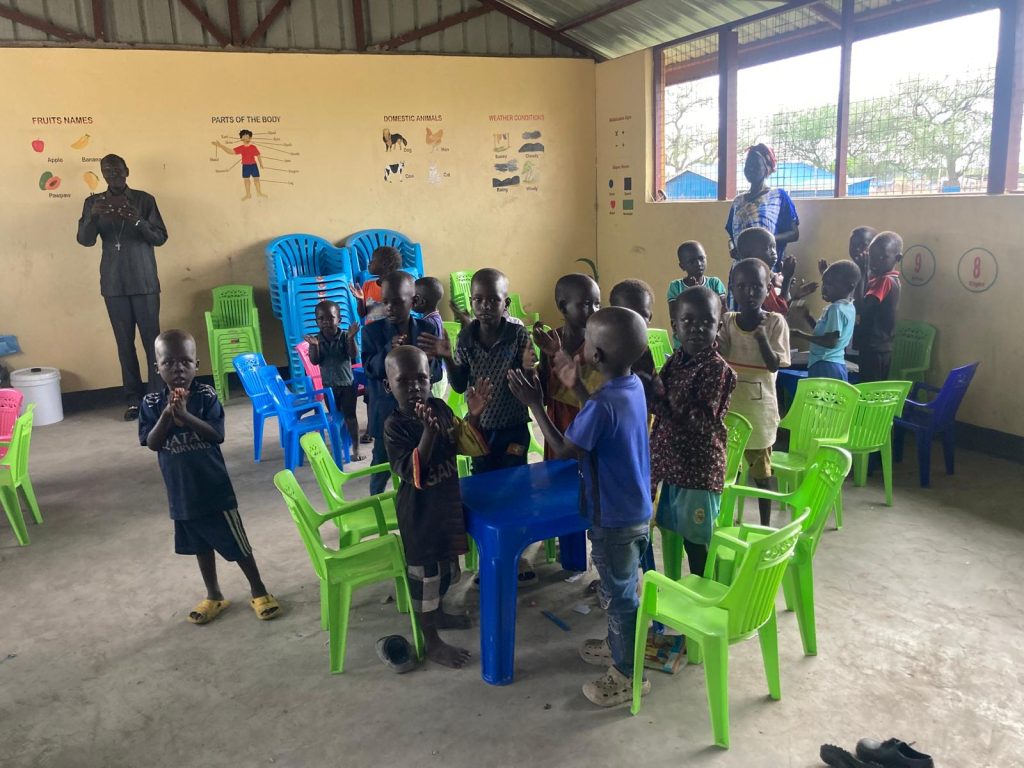
This is a preschool class in a Kondako primary school.Class 1 (i.e., a younger level in primary school) students who gather together for school. While there is gratefulness for the building structure, we notice that they don’t have desks, tables or chairs.Kondoko primary school that Boma supports! Such attentive and well-behaved students!What a blessing to be able to visit a school that Boma supports!
Health & the Maternity Clinic
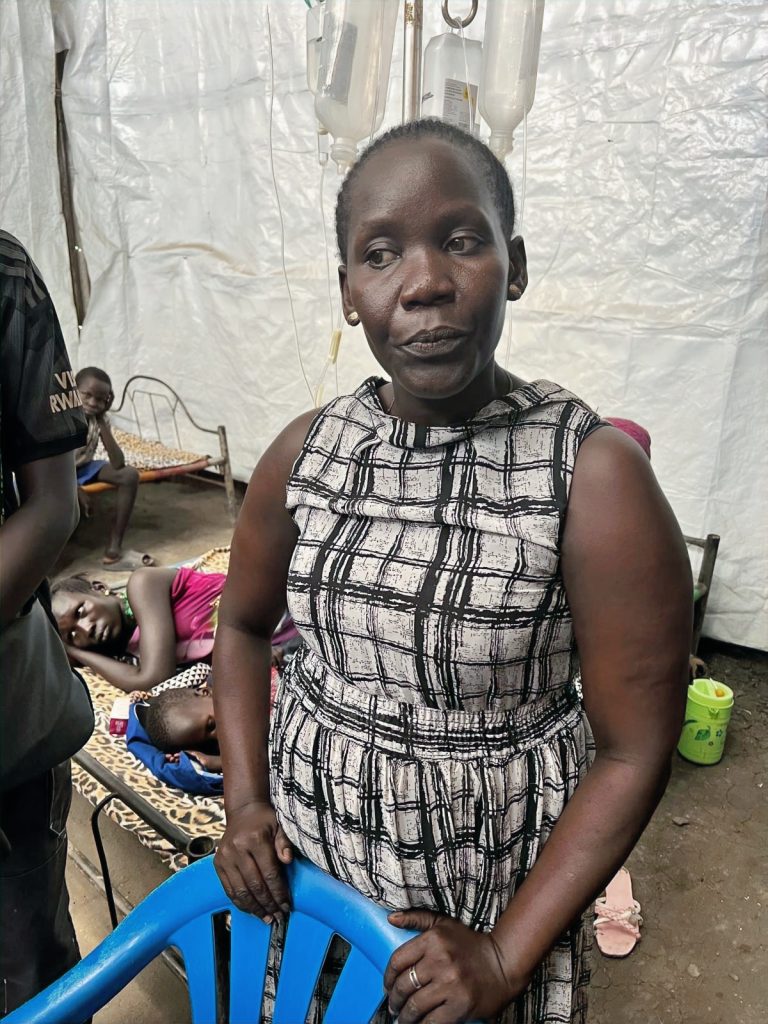
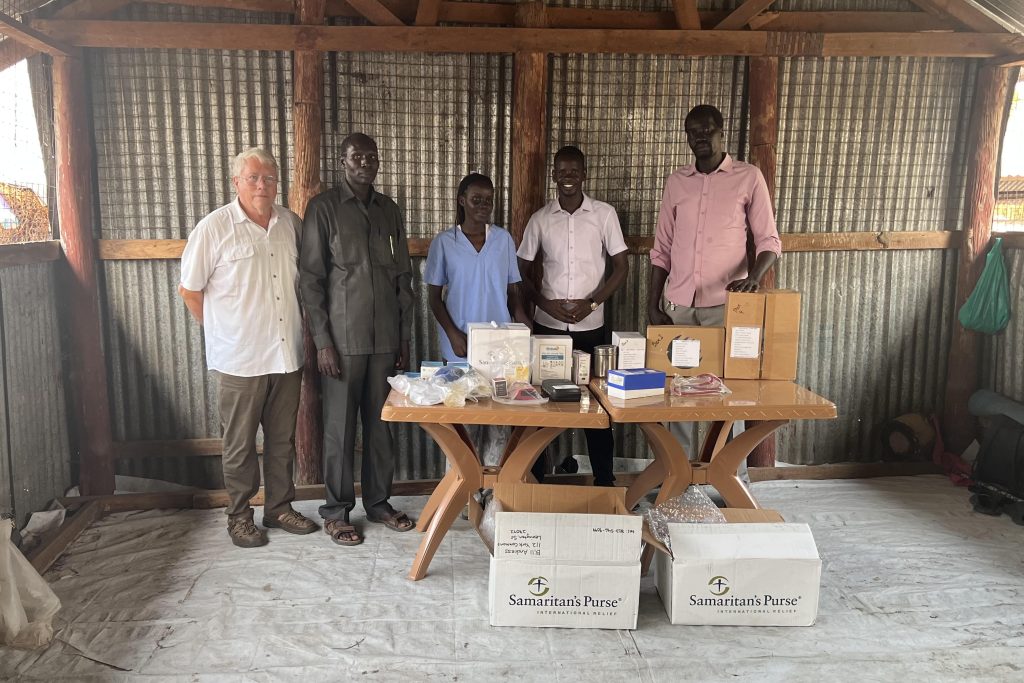
Victoria is a registered nurse who runs the clinic in Pibor.Midwife Chaalit Orozu with supplies for the Midwife Clinic donated by Samaritan’s Purse.
Many thanks to World Medical Mission of Samaritan’s Purse for the donation of supplies for the maternity clinic!
From right: Dr Lotila Gain, clinical officer Matthew Jousef, midwife Chaalit Orozu, Pibor Presbytery moderator Rev James Zeelu, Frank Dimmock
Community & Leaders
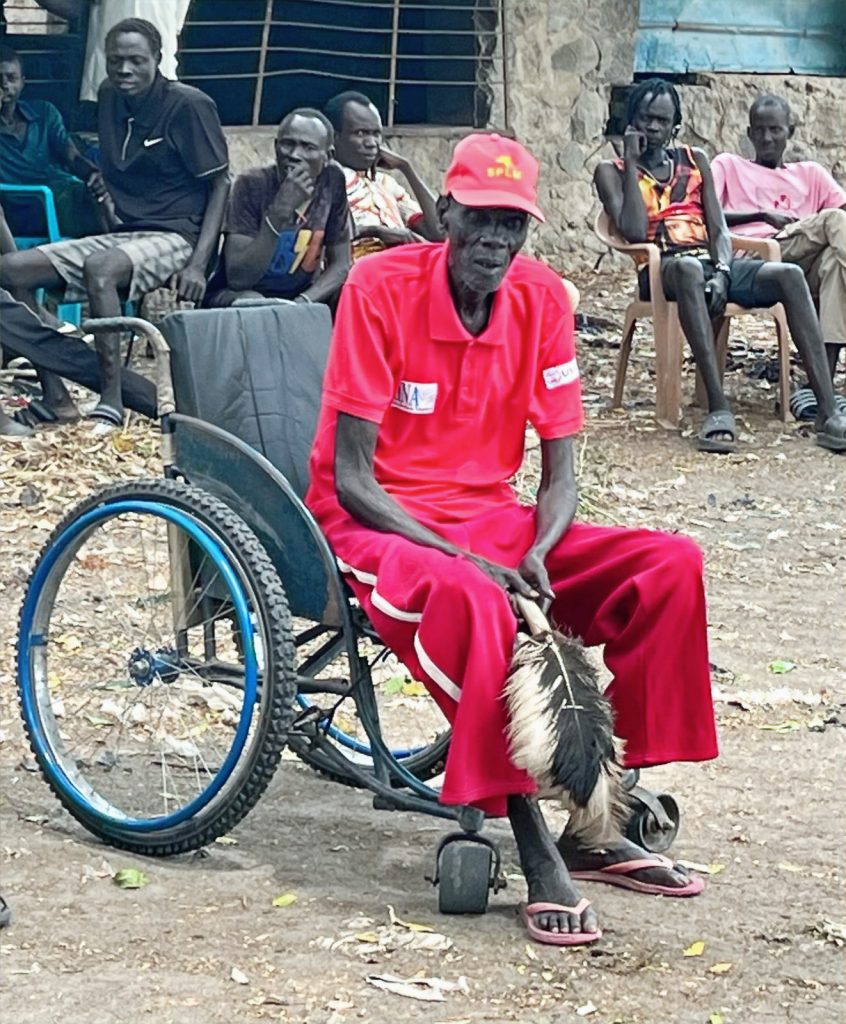
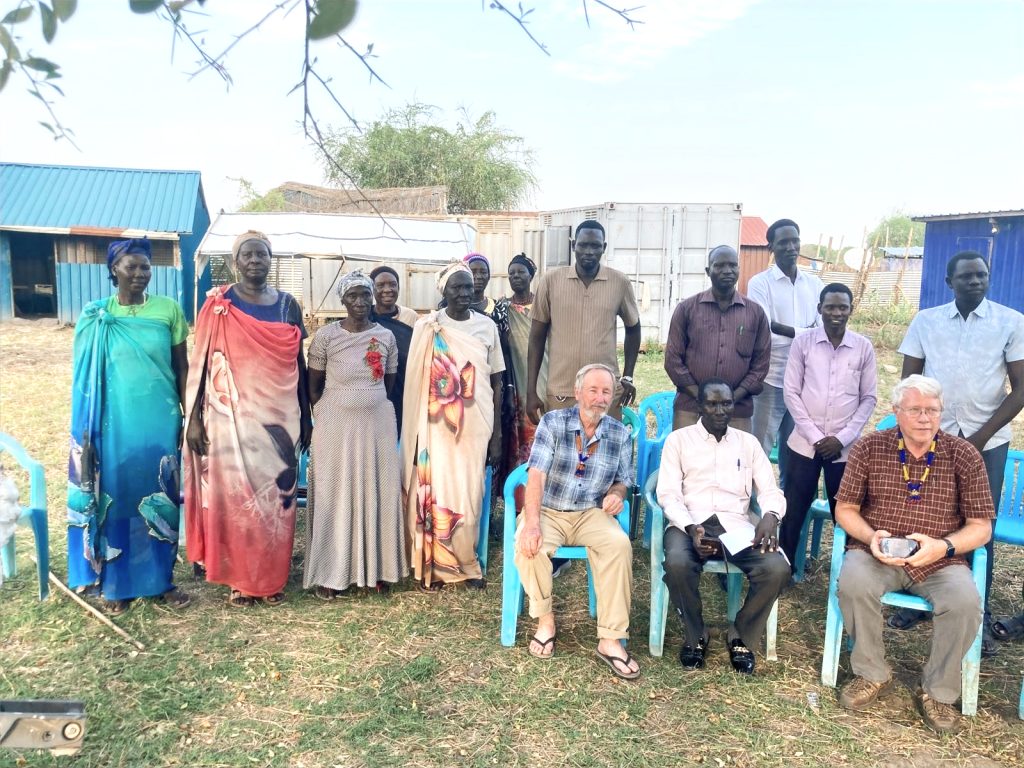
This is a second-generation Chief, meaning that his father was also a chief. (A chief is similar to a mayor.)Meeting with representatives from three congregations at the SALT compound to discuss their needs and priorities.SALT compound abandoned about 10 years ago because of insecurity.
Water
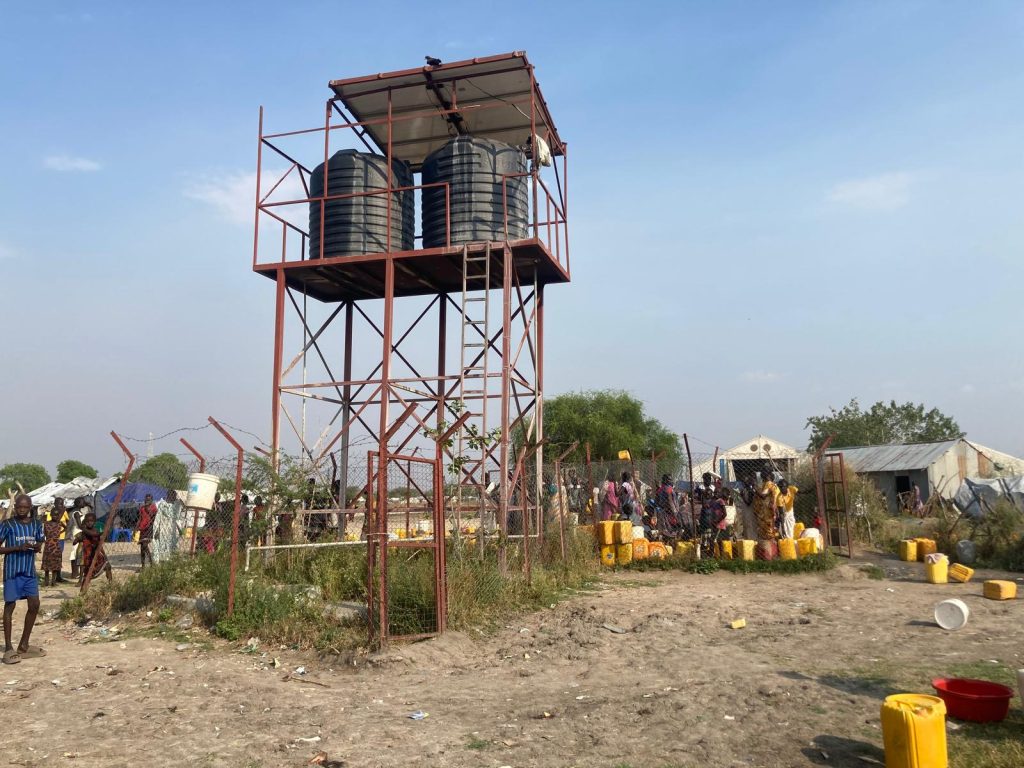
Women collecting their daily water.The water is in tanks on this tower. There is a solar-powered pump to pull water out of the ground.
Across the River — the Old Mission
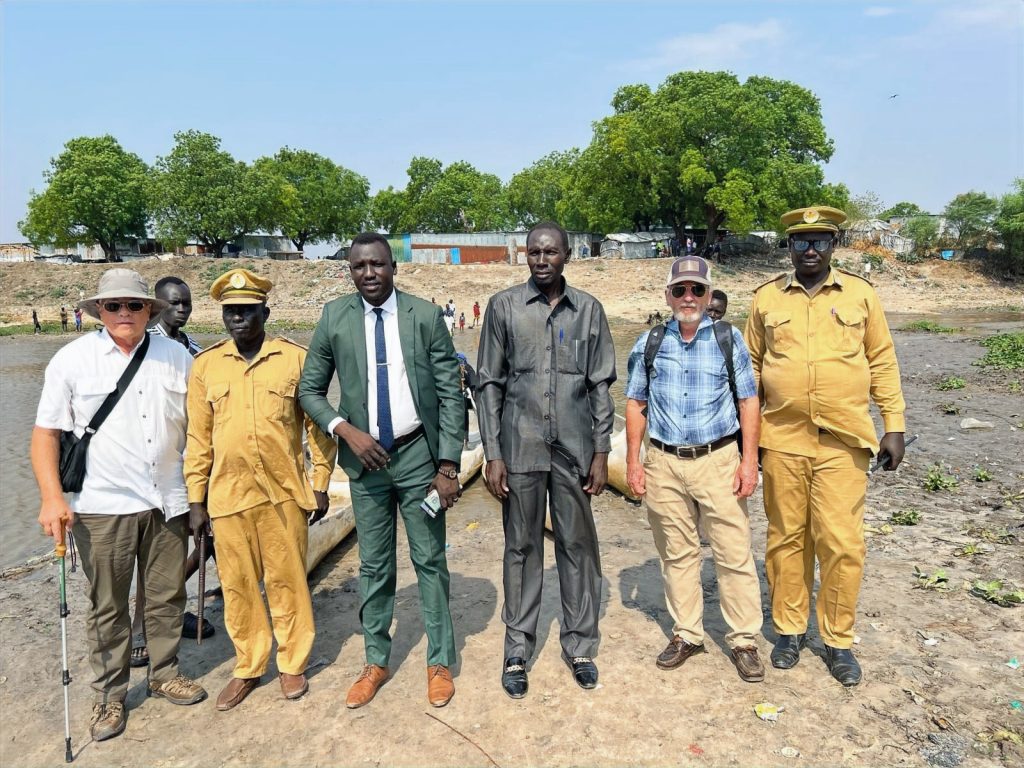
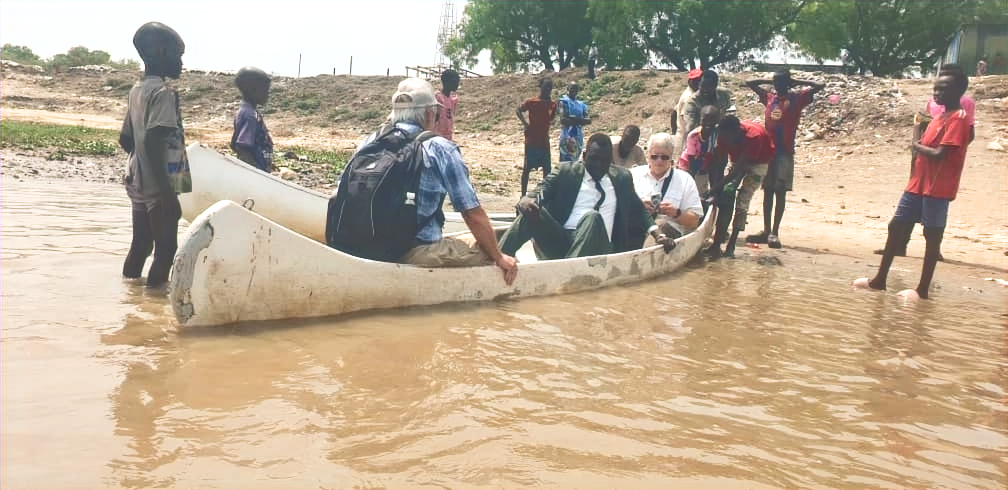
Across the Pibor with the Mayor.Trip to the visit the other side of the river and the old mission home.This is an old mission home that was abandoned when the missionaries were kicked out by the Islamic government in the 1960s.Old mission hospital built around 1952. Missionaries were forced to leave in 1956.
I carried seven Luopad kits to Pochalla. We were running low at home and that was all we had. As I was talking with the county commissioner, I shared with him about the pads. He had heard of them, but they are not in wide use there. He shared that as part of his strategic plan for the county; he wanted to make Luopads available to 5000 women in the county. I asked if he had a plan for accomplishing this goal. He looked at me and said, “You are my plan! God has sent you here with these pads!” Talk about God expanding your vision!
There is a tailor there with a shop and he runs about 4 – 5 treadle sewing machines. We stopped by his shop, and he looked over the pads and said he would have no problem putting them together. The hard part is the logistics of getting the materials there. It will probably have to come from the Ethiopian side. And there are times during the rainy season when Pochalla can’t be reached – even by air as the airstrip is too muddy. They will need flannel, used towels, and snap machines and supplies. I will dig in to see if this can be accomplished.
Dry Conditions
On Saturday the 22nd, a couple of us flew to Mundri. Robert Cely stayed in Juba and then flew home on Sunday. An official in Juba with a rural development institute also flew over to Mundri with us. We had sorghum seed and some irrigation supplies. It was a pretty full plane! We spent a busy four days in Lui. I’ve never seen it so dry there. Everything was looking for water: crows, frogs, and cows!
Hospitality
We were well fed again by the ladies of the Fraser Cathedral in Lui. We stayed in the guest houses of the Lui Hospital. Most afternoons we ended up under the huge mango tree in front of the cathedral. It was much cooler under the tree. And a good breeze helped as well. It reached over 100 degrees all four days we were there. Thankfully, we had fans in our rooms to help cool things a little more so we could sleep.
Sorghum Seed, Cassava, Crowder Peas and Gnuts!
On Monday, we went to Mundri. We delivered 100 kg of the new sorghum seed to a bishop for Mundri. The bishop will handle distributing the seed to his people. We were met by the bishop’s wife as he was traveling. She served us a powdered mango drink mix that was tasty!
Cassava is an important crop for this area. It is very drought hardy. Flour is made from its roots. There is cyanide in the root, and they must be processed to remove it. There is a new technique to accomplish this. The traditional method requires the roots to be pounded in a large bowl with a pestle (like a club). The ladies are the ones that do this hard work. The resulting flour is soaked with clean water and set out in the sun for several days. The cyanide is mobilized in the water, which is then poured out, leaving usable flour.
The new method cuts the root into chips. The chips are more transportable and store better. Weevils do not get into it as easily. It is also less labor intensive. They are seeing good results with the new method. I was able to see some of the seed from the Mississippi Silver Hull Crowder peas I took last year. They love to eat the leaves as they are growing, and then they dry the peas to cook and enjoy later. They really like the flavor of the peas.
I was able to see the PICS bags used to store grain and seed. We’ve introduced these air-tight bags in numerous areas with great success. They can be reused from year to year as long as they don’t have any holes in them.
I also got to sample some of their gnuts, which is short for ground nuts – which are peanuts! These peanuts are tiny but have a good flavor. I’m not sure if it is a varietal issue or a lack of calcium that causes them to be small. I may try to take some of our seeds and see how our varieties fare.
Lui Water Project
Later that day, we went to see the Lui water project. In previous visits, the vegetation has been too dense for me to get an overview of the whole project. It started operating in 2013 and only worked about three years before it was damaged in the conflicts of 2016. When water is such a precious commodity, it breaks my heart to see this infrastructure gone to waste. We will continue to investigate the potential to restart the system, even if it is at a reduced capacity. When you see the long lines of jerry cans at the boreholes all day long, you really understand the need.
Rural Development Institute
Tuesday was a big day. First, we stopped and met with the county commissioner of Mundri East (which includes Lui). She was very excited to hear we were going to the Amadi Rural Development Institute. She was very supportive of taking the first steps to help bring the institute back to life. There are three counties that the institute served and hers is one of them.
The administrator from Juba had set up a meeting with community leaders at the Rural Development Institute for us. We met in the auditorium of the institute. And while not in pristine shape, it served our purposes very well. I counted nearly 100 people in attendance, with some standing outside listening through the open windows. I shared our vision of restarting the water system for the institute. I stressed that we could not move forward without the help and support of the community.
Everyone wants to see the water return and the Rural Development Institute spring back to life. It could be a place of vocational and agricultural training that could impact the 150,000 inhabitants of Mundri East, Mundri West, and Mvolo counties. The water project alone will benefit the 5000 residents of the payam (village) of Amadi in Mundri West County.
We must first remove the old pump from the well. We will install a new submersible pump and a solar installation to power it. A security fence will be put in around the well and tank. Once operational, we can start testing the existing pipe system in the institute. We will add a water kiosk to supply water to the community and possibly pipe water to a nearby medical clinic.
Greg Force from Boma was able to get a list of well drillers in Juba on Thursday after I left. Hopefully we can find someone who will work with us in getting the system back in operation.
This is a big undertaking. But by using the infrastructure already there, the overall costs will not be as high as starting from scratch. It will be the largest project that EDEN has undertaken. Please pray for God’s direction, for funding, for favor with officials, for finding the right well repair company.
Right now, people in the community are using manual boreholes for water, some of which dry up during the dry season. They also source water from the river, which is not clean and can have crocodiles. This water project will be a great benefit for the people of Amadi. And it will be a great testament of God’s love to the surrounding community. And it is the first step in getting a larger portion of the institute operational once more. Stay tuned for more details!
Greg and I made it back to the air conditioning on Wednesday. Juba was still extremely hot and did not have the nice breeze that Lui did. I started my homeward trek on Thursday and Greg started on Friday. We both reached home safely. We appreciate your prayers as we were in the field.
The Boma Assistance Group/Trinity South Sudan Ministry sent a team of five to Pochalla, South Sudan from February 17 to 21, 2025.
Objectives
The primary goals for the trip were:
Meet with the church leaders of the Presbyterian Church of South Sudan (PCoSS).
Distribute Talking Bibles (audio Bibles) in the local language.
Distribute reading glasses and sunglasses.
Assess the status and possibly finish installation of solar water system in Pochalla.
Evaluate the farming methods and techniques, including dry season watering of crops.
Donate laptop computers for the computer lab at a local theological college.
Gracious Hosts
Our hosts in Pochalla were the Commissioner of Pochalla South County and the local Presbyterian church. We were graciously received by the Commissioner and the church leaders, including the church choir, when we landed on the dirt airstrip on Monday, February 17. We stayed in a compound and slept in a tukel. The compound had electricity and wi-fi during the day from a generator, so some were able to communicate with family back home (a seven-hour time difference).
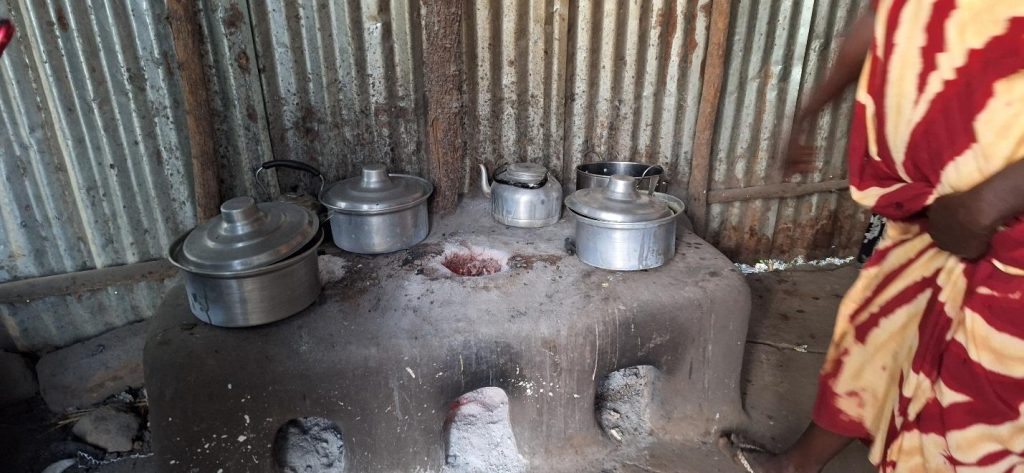
Our meals were prepared by the women of the church. Most of the food (rice, flour, lentils, salt, cooking oil) was purchased by us in Juba. Onions and antelope (white eared kob) meat were gifts of the community. All of the food was cooked over fire or wooden embers. Every meal was delicious!
Laptops
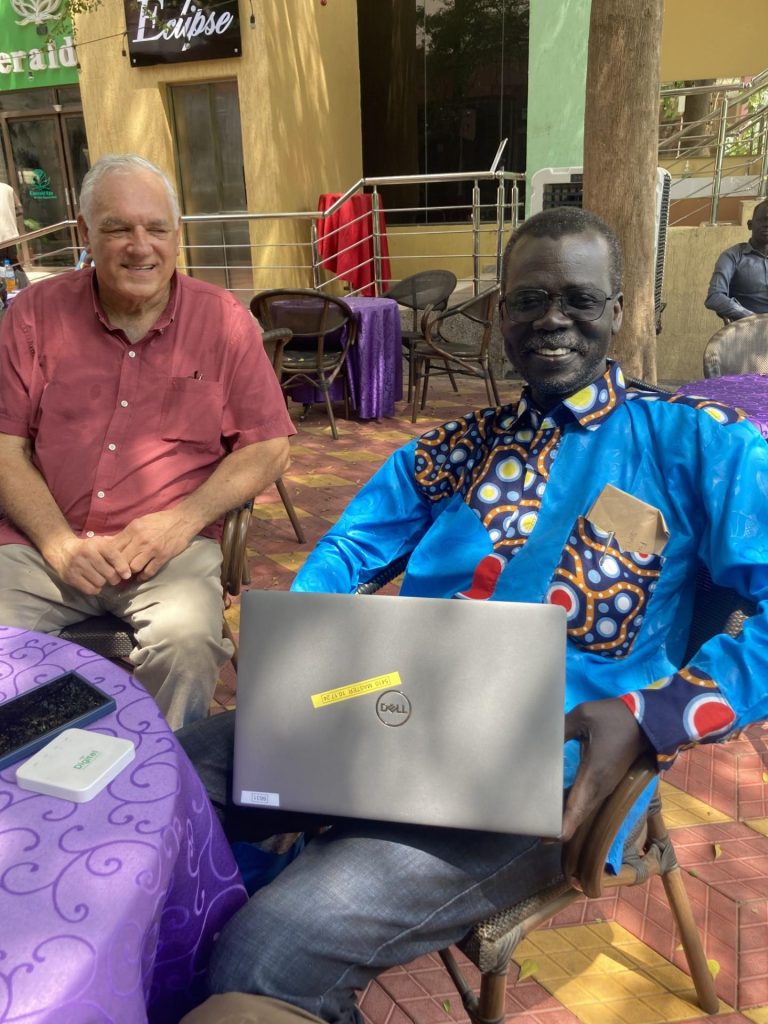
The laptops were presented to the theological college for student use.
We also met with the local pastor and the Moderator of Pibor Presbytery. Their needs are:
more secular education (teachers are not being paid)
financial support for seminary students
peace among the tribal groups
clean water.
Kindness
An interesting situation arose a couple of weeks before we arrived in Pochalla. The people of Pochalla are of the Anuak tribe, and one of the neighboring tribes are the Murle. There are frequent violent clashes between the two groups. A few weeks before we arrived, a young teenaged Murle boy became separated from his people and was lost. For three days he had no food or water. He slept in a tree at night because of lions and hyenas. One night he fell from a tree after falling asleep. On the fourth day, he was found by the Anuak. He was thirsty, and they gave him drink. He was hungry, and they gave him food. They took him into their house and gave him shelter. The Anuak contacted the UN and were arranging to have the boy taken back to his hometown of Pibor. Hopefully this “Good Samaritan-like” example of kindness can lead to peace.
Glasses
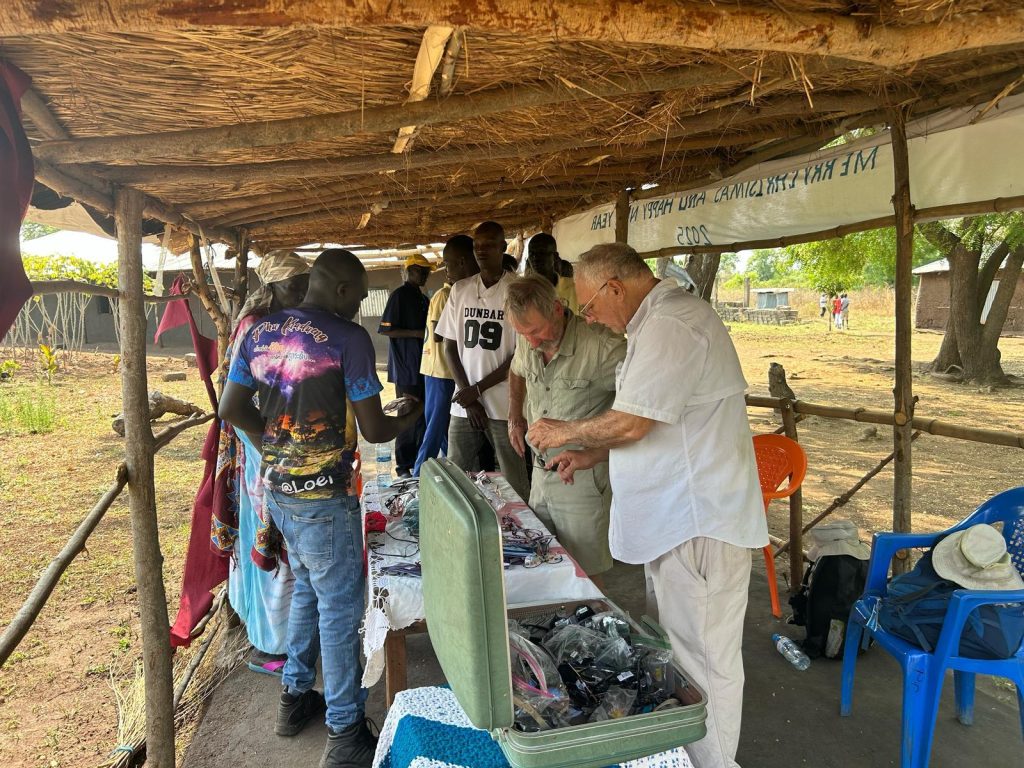
The reading glasses, donated by Lions Club, were very popular and greatly appreciated. We also gave away sunglasses, also donated by Lions Club.
Talking Bibles
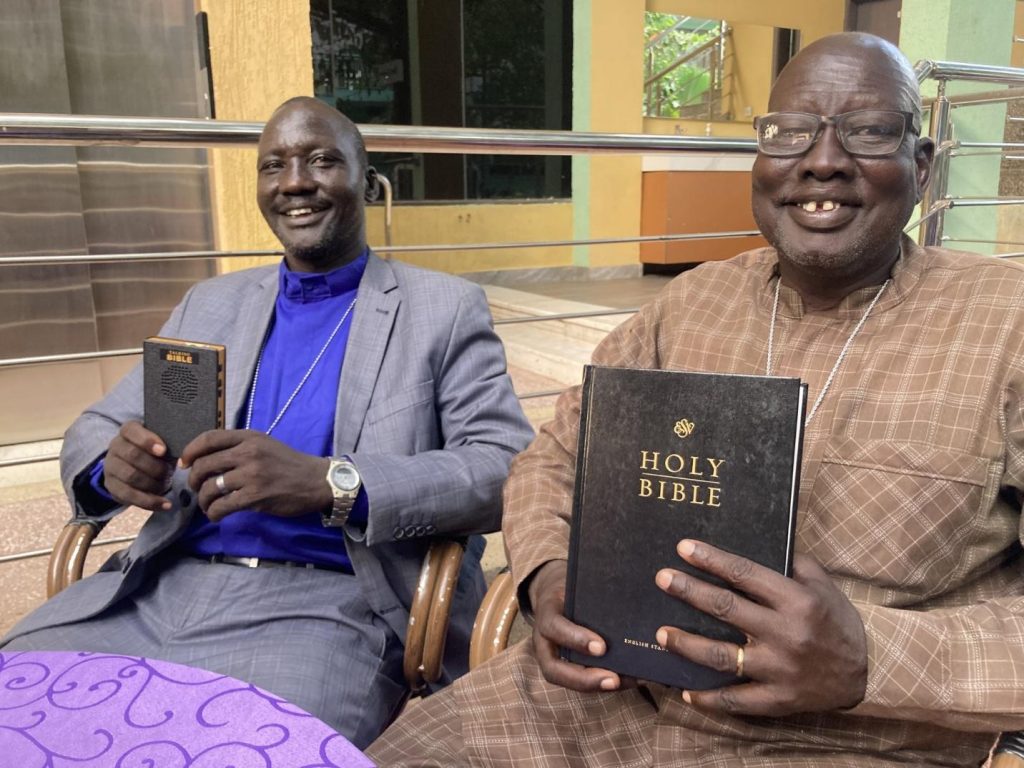
We distributed Talking Bibles (about 40 in Anuak and 10 in other languages) after showing them how to use them. They want more!
Since English is a national language, we tried something a little different this time. We paired three ESV Talking Bibles with three ESV hardcopy Bibles. A pair was given to three different men from three different ethnic groups (Anuak, Murle, and Nuer). They are to use them in small groups to help people learn both English (national language) and scripture. We will follow up to see if this pairing is worthwhile.
Hunger
Before leaving the US, we became aware of a severe hunger situation in Pochalla. It was so bad that the commissioner of Pochalla actually had shots fired between his legs by an angry and hungry soldier. Boma and Eden (partner group) wired funds to the commissioner to help with this situation.
Prayer Request
While everyone agreed that our Mission Trip was a great success, a recent turn of events has created great fear and harm. A severe cholera outbreak has engulfed the nation which has very limited ability to address it. Recent withdrawal of support greatly reduces the potential for successful medical intervention. Furthermore, recent actions by the government seem to be creating a rapid descent into another widespread civil war.
Please pray for the people of South Sudan that they may be relieved of government oppression and gain the ability to progress.
Please continue your financial and prayer support. THANK YOU.
During this year’s trip we went to two South Sudanese refugee camps located in northwest Uganda. (We went to these camps due to the conflict in South Sudan, which prevented us from going to our original planned destination in Pibor or Pochalla, South Sudan.)
Having received reports of potential potable water shortages within the refugee camps, I previously visited WaterStep, an NGO in Louisville, Kentucky and learned how to operate their chlorine generator and bleach maker for disinfecting water and sanitizing. The chlorine generator uses a 12-volt car battery and salt to produce chlorine gas that is injected into the water to kill waterborne pathogens and can treat up to 10,000 gallons of water per day. The bleach maker produces a gallon of medical grade bleach at a concentration of 5,000 parts per million using only water, salt and a 12-volt DC battery.
With support from Saxe Gotha’s Change for Sudan ministry, I purchased a chlorine generator, bleach maker and supporting equipment and brought them to the refugee settlement camps. There are limited water sources for the over 300,000 South Sudanese refugees who have fled to Ugandan refugee camps since August 2016 with an average of 4,000 additional refugees arriving daily.
I was able to train refugees and camp personnel to set up and operate the chlorine generator. Based on an assessment of the water resources, it was determined that an optimal use for the chlorine generator was to treat rainwater captured in cisterns. Camp personnel at both settlements received training for the bleach maker. They immediately identified the savings that could be achieved by producing their own bleach to disinfect water storage tanks and jerry cans.
The Rhino Camp, where we worked for three days, is struggling to provide drinking water to its 86,000 refugees. In the Wanyange village that we visited, over 5000 villagers are relying on a single borehole for all their water needs. By installing and training people to use the chlorine generator to purify water, the potable water available was increased by a factor of five to 50,000 gallons per day.
Two by-products are produced during the chlorination process: lye which they can use to accelerate the decomposition of human waste in their latrines and liquid chlorine that can be used as a house hold disinfectant. The volunteer from the village plans to sell these two products to receive compensation for his efforts with treating the water and keeping the system operating.
During our last two days at the Bidi Bidi camp I conducted training for water chlorination and bleach making. The bleach maker was left with the head WASH Coordinator so that they can begin using it to disinfect their water storage tanks and jerry cans. Two other teams included a doctor and three nurses with the medical mission team who served the medical needs of 600 South Sudanese Refugees and provided 400 people with reading glasses.
The theological team distributed 150 Talking Bibles in their own language to South Sudanese pastors, evangelists and women leaders from multiple South Sudanese denominations.
Trauma healing seminars were also conducted for the pastors who are personally struggling with violence and atrocities that they have witnessed. With this vital assistance, they can begin helping their own congregations deal with the trauma inflicted upon them so that they may too begin the healing and reconciliation process.
In February 2016, Greg Force joined a mission trip to South Sudan, supported by Saxe Gotha Presbyterian Church, which funded humanitarian aid and peace initiatives responding to government violence against citizens.
The team’s original plans to return to Pibor for water and sanitation work shifted due to political instability. Instead, they visited South and North Pochalla Counties to assess needs among the Anayaak people near the Ethiopian border.
On February 23rd, the South Sudanese Army attacked opposition forces in Pibor, burning the town and forcing evacuations. Force expressed gratitude that local friends escaped safely.
Pochalla Trip Success
The Pochalla mission proved productive. The team evaluated medical needs, supplied medical resources, distributed over 200 Talking Bibles, and provided theological training for church leaders from five denominations. Force noted the communities’ overwhelming spiritual hunger.
Water and Sanitation Assessment
As a geologist specializing in environmental consulting, Force evaluated water infrastructure. Pochalla village, situated on the Akobo River, has 14 wells drawing from three aquifers. However, three pump mechanics lack proper maintenance tools and replacement parts. Across six South Pochalla villages, conditions varied: some wells needed maintenance, one had collapsed, two had broken pumps (people using riverbed holes and river water respectively), and one remote village of 280 families depended entirely on the Gilo River. In North Pochalla, one village had a single well while another 250-family community walked over an hour to reach the Akobo River.
Community Needs
The Anayaa maintain sustainable livelihoods through agriculture, livestock, fishing, and hunting. After meeting with governors, kings, mayors, and church leaders, Force identified pressing needs: the region needs approximately 40 qualified teachers and health professionals. Two volunteers—a nurse and teacher—sustain local clinic and school operations. Communities require additional wells, surface water filtration systems, ordained ministers for sacraments, theological training, and more Talking Bibles.